A small town of approximately 2000; few people outside of the Viscounty of Salinmoor know of it.
Locations numbered below will be defined as the town is explored.
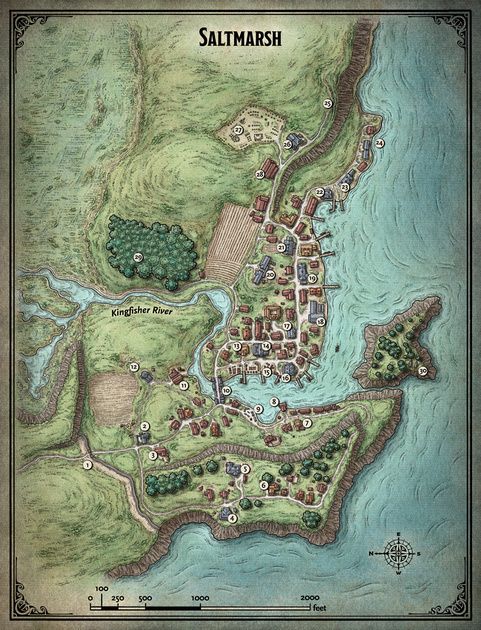
1. City Gate. The garrison at the gate keeps a sharp watch on traffic passing to and fro.
2. Barracks and Jail.
3. The Wicker Goat. The oldest tavern in Saltmarsh, run by Lankus Kurrid – a retired officer of the Keoish army. The establishment caters to dwarves miners and town guard. Sleeping quarters available for rent can be found on the second floor. Lankus remains grateful to the party for saving him and some dwarves from a gang of belligerents from Seaton.
5. Mining Company Headquarters. Once a mansion owned by a local noble family, this building was purchased by King Skotti and serves as the dwarves’ administrative headquarters. Knowing the locals wouldn’t have anything up the task, a “passable” forge (by Dwarven standards) has been set up in the courtyard. Numerous dwarves can be found here throughout the day working on various projects to guide and sustain the mining efforts.
7. Faithful Quartermasters of Iuz. A trade outpost managed by Captain Xendros. Captain Xendros is able to acquire and trade in magic items. She’s always interested in coin and foodstuffs to help sustain the faithful of Iuz.
8. Empty Net. Partially supported by stilts driven into the harbor, this rickety tavern has seen better days. It’s an ideal location for those looking for a rowdy affair.
9. Green Market. A strip of open land that is the place for everything that isn’t fish, salt, or nautical wares, this market stretches among a dozen stalls down to the bridge. A few goats, eggs, cloth, marsh plants, and pots are available, as well as the occasional mule or ox for hauling carts.
13. The Snapping Line. A beloved inn and tavern built from the planks and hulls of a half a dozen decommissioned fishing ships. Hanna Rist continues the Rist family tradition of serving ‘claw wine’ – a spirt made from lobster meat and potatoes. Patrons feel strongly, one way or another, about the claw wine.
14. Council Hall. This large brick building contains the offices of the town councilors and the chamber where they meet to discuss business. A small tower rises from the building, housing a horn at the top, which is blown to announce the beginning of a council session open to the public or other significant events. A sturdy but weatherbeaten platform and gallows near the front entrance tends to catch the eyes of passersby.
15. Weekly Market. Built around the first well dug for the fisherman in the town’s early days is a large market square where merchants gather weekly to sell their wares.
18. Fishmonger’s Plants. The large fish-processing buildings in this area reek of prosperity (and fish). All are engaged in salting or brining the catch brought in by the fleet. Most of the time these places are busy, and the workers have little time for chatter.
21. Mariner’s Guildhall. The guild serves all towns along the coast, providing a bunk and a meal for sailors passing through. Sea captains in search of a crew stop here, as do others seeking news from afar.
24. Crabber’s Cove. East of the smaller fishermen’s docks, built along the shores of a secluded bay are a handful of buildings known colloquially as crabber’s cove. At times, those very down on their luck take residence there briefly. Down on their luck merchants from Gradsul who value secrecy have also been known to visit. These cottages are built on pylons. During high tide, water passes underneath the cottages. During storms, sometimes the water passes through them.
29. Sea Grove of Obad-Hai. This verdant green grove is a sacred site of the ancient nature god. The venerable halfing priest Ferrin Kastilar tends to this holy site.
 Saltmarsh